
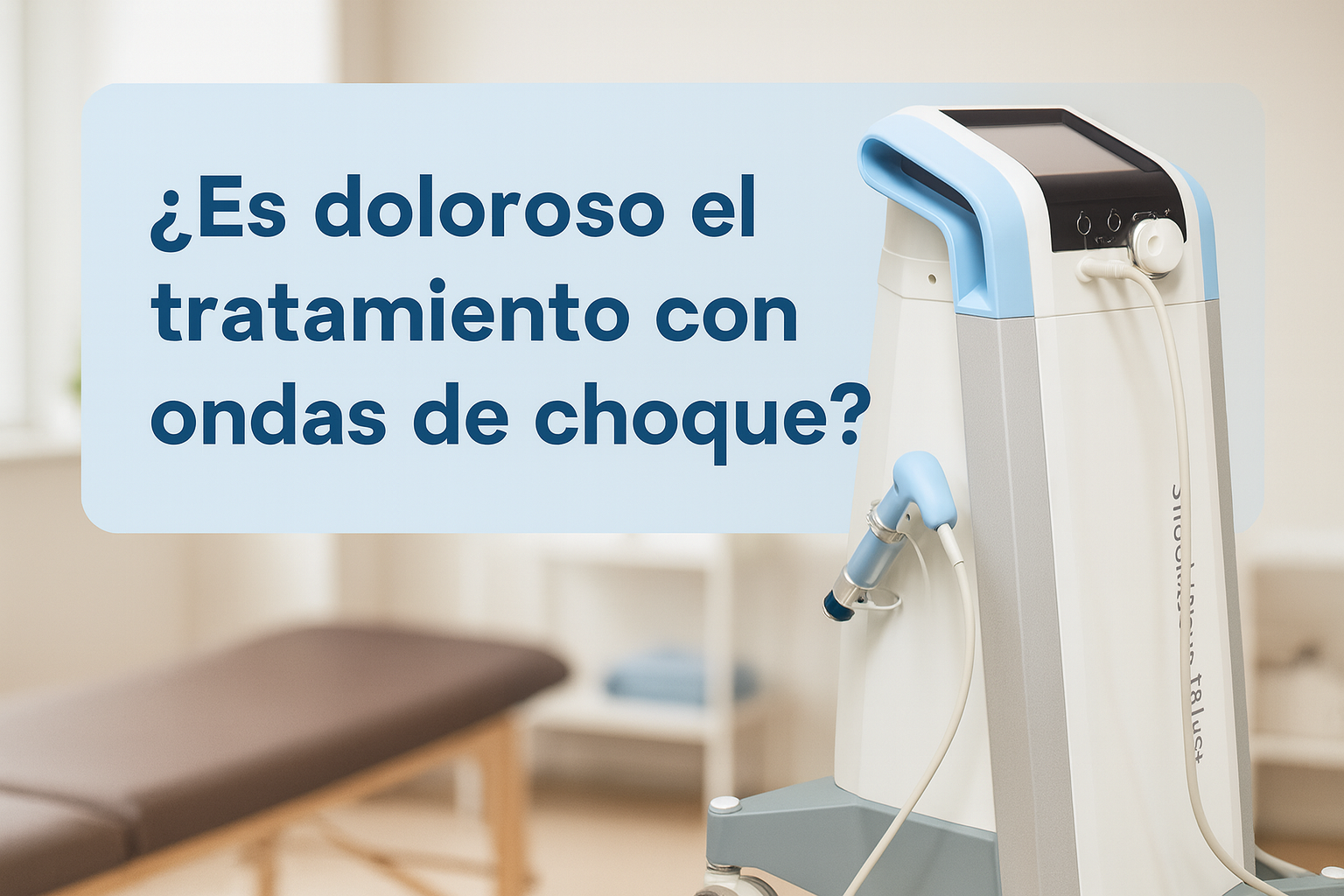
Many patients suffering from chronic pain, tendon injuries, or musculoskeletal conditions hesitate to consider shockwave therapy (ESWT). Why? Because they worry the treatment might be painful. Misconceptions about the pain level of shockwave therapy often discourage individuals from seeking effective, non-invasive therapy options, even when they have been struggling with long-term discomfort.
When pain affects your mobility, daily performance, or athletic activity, waiting too long makes the condition worse. Without correct treatment, inflammation increases, tissues weaken, and recovery becomes slower. The fear of discomfort during ESWT delays healing—and keeps patients trapped in unnecessary suffering.
Shockwave therapy is a highly effective non-invasive treatment that stimulates tissue repair, reduces pain, and enhances mobility through targeted acoustic waves. Before you decide whether ESWT is right for you, it’s essential to address the big question: ¿Es doloroso el tratamiento con ondas de choque?

Shockwave therapy is **not generally considered painful**, although certain sensations vary depending on the treated area and the individual’s sensitivity. Most patients describe the feeling as a firm tapping or pulsing on the skin. The therapist can adjust the intensity at any time, making ESWT a comfortable and highly controllable procedure.
While mild discomfort may occur—especially in inflamed or chronic tendons—it is usually brief and manageable. Anesthesia is not required, and most patients tolerate the session very well.

To help you make an informe decision, the following sections explain what shockwave therapy feels like, why some people experience more discomfort than others, and how clinics minimize pain. Whether you are a patient, a therapist, an athlete, or a rehabilitation professional, understanding ESWT sensations and outcomes is essential for proper treatment planning.
Key Patient Questions About ESWT Pain Levels
Patients commonly ask:
- What does shockwave therapy feel like?
- Why do sensations vary between patients?
- Which conditions cause more sensitivity?
- Does radial ESWT feel different from focused ESWT?
- How do clinicians reduce discomfort during sessions?
- Will I feel soreness afterward?
- Is shockwave therapy effective long-term?
- Who is the ideal candidate for ESWT?
Table of Contents
- What Shockwave Therapy Feels Like
- Why Pain Levels Differ Between Patients
- Conditions That Affect Pain Sensitivity
- Radial vs. Focused Shockwave: Pain Comparison
- How Therapists Minimize Discomfort
- Post-Treatment Pain Expectations
- Long-Term Effectiveness of ESWT
- Who Benefits Most From ESWT
- Recommended Professional Shockwave Machine
- Conclusion + Call to Action
1. What Shockwave Therapy Feels Like

Shockwave therapy uses acoustic pulses that penetrate the tissue. The sensations described by most patients include:
- Mild pressure on the skin
- A vibrating or tapping feeling
- Occasional sharp sensations in inflamed areas
Table 1: Typical Sensations During ESWT
| Sensation | Description | Patient Reaction |
|---|---|---|
| Mild Pressure | Low-intensity acoustic pulses | Comfortable |
| Pulsation | Medium intensity for chronic injuries | Manageable |
| Sharp Sensation | Occurs near highly inflamed tissue | Short and tolerable |
Most sessions last 5–10 minutes per treatment area, and discomfort usually decreases as tissue adapts.
2. Why Pain Levels Differ Between Patients
Pain levels vary due to multiple factors:
- Inflammation level — inflamed tissue is more sensitive.
- Injury type — fascia, tendons, and muscles react differently.
- Energy level — therapists adjust intensity based on tolerance.
- Radial vs. focused ESWT — deep penetration may create stronger sensations.
- Individual pain threshold.
3. Conditions That Affect Pain Sensitivity
Some musculoskeletal conditions are naturally more sensitive.
Table 2: Conditions and Expected Pain Levels
| Condition | Pain Level | Reason |
|---|---|---|
| Plantar Fasciitis | Moderate | High tension on the fascia |
| Achilles Tendinopathy | Moderate-High | Deep tissue involvement |
| Tennis Elbow | Low-Moderate | Smaller treatment zone |
| Shoulder Calcification | High | Calcified tissue is reactive |
| Trigger Points | Low-Moderate | Short bursts of discomfort |
4. Radial vs. Focused Shockwave: Pain Comparison
Radial ESWT spreads energy over a larger area and is generally gentler. Focused ESWT penetrates deeper, sometimes resulting in more intense sensations.
Table 3: ESWT Type Comparison
| Type | Pain Level | Penetration | Best For |
|---|---|---|---|
| Radial Shockwave | Mild–Moderate | Superficial | Muscle, fascia, soft tissue |
| Focused Shockwave | Moderate–High | Deep | Calcification, chronic tendons |
5. How Therapists Minimize Discomfort During ESWT

Professionals use several methods to ensure patient comfort:
- Begin with low energy and increase gradually
- Adjust wave frequency and depth
- Use conductive gel generously
- Modify pressure and angle of the handpiece
- Pause or adapt based on patient feedback
6. Post-Treatment Pain: What to Expect
After ESWT, patients may feel mild soreness for 24–48 hours. This is normal and indicates that tissue regeneration has begun. Heavy exercise should be avoided during this short recovery period.
7. Long-Term Effectiveness of Shockwave Therapy
Shockwave therapy is well-established for:
- Reducing chronic pain
- Stimulating collagen regeneration
- Increasing blood flow to damaged tissue
- Breaking down calcifications
- Improving mobility and functional performance
Success rates range from 70%–90% depending on the condition.
8. Best Candidates for Shockwave Therapy
Shockwave therapy is ideal for:
- Athletes with overuse injuries
- Patients with chronic tendon or fascia pain
- Rehabilitation patients needing accelerated recovery
- Individuals seeking alternatives to surgery
- Clinics offering musculoskeletal treatment solutions
9. Recommended Professional Shockwave Therapy Machine

For physiotherapy centers, rehab clinics, beauty clinics, and sports medicine facilities, the NEWBELLE Professional Dual-Handle Shockwave Therapy Machine (SW25) provides exceptional treatment quality, customizable settings, and high-performance precision.
👉 Click here to view the SW25 Shockwave Therapy Machine
Conclusion
Shockwave therapy is generally not painful, and any discomfort tends to be mild, brief, and easily controlled. As a non-invasive therapy, ESWT is widely trusted in physical rehabilitation, sports medicine, and musculoskeletal treatment because it promotes tissue repair without surgery, drugs, or downtime.
If you are seeking high-quality shockwave equipment for your clinic or practice, NEWBELLE provides advanced, customizable solutions designed for professionals worldwide.
👉 Explore NEWBELLE Shockwave Therapy Machines