
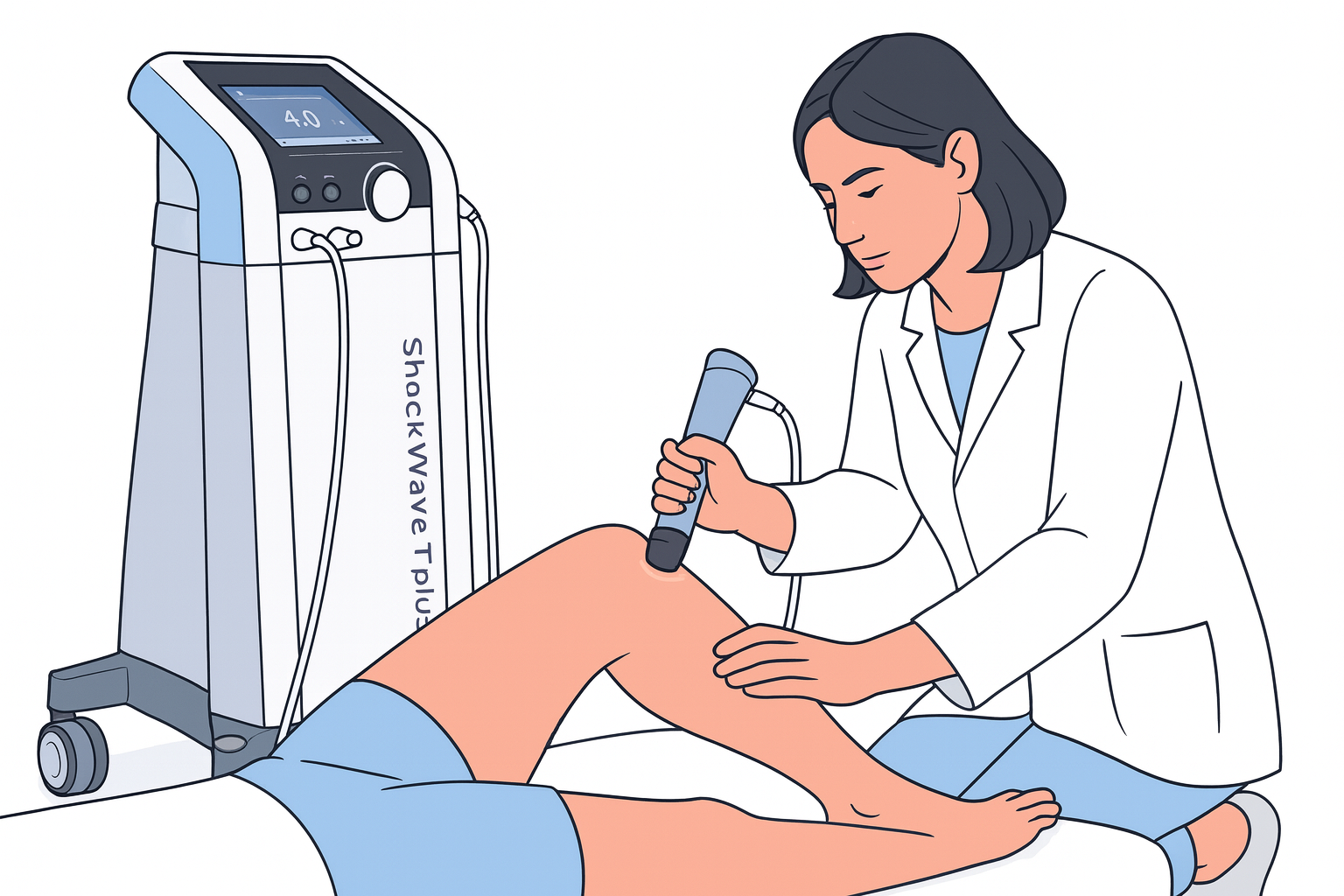
A comprehensive, practitioner‑friendly guide comparing shockwave therapy (ESWT) to surgery, pain medication, and steroid injections—covering mechanisms, clinical benefits, indications, risks, and implementation tips for doctors, physiotherapists, sports medicine specialists, and wellness centers.
Introduction: Pain Management Challenges
Chronic musculoskeletal pain, sports injuries, and tendon disorders affect millions of people worldwide. Patients often turn to painkillers, steroid injections, or even surgery, only to find temporary relief or face lengthy recovery times. This cycle creates frustration, limits mobility, and undermines quality of life.

Prolonged pain can keep patients from training, working, or simply enjoying their day. Medication may dull symptoms without repairing tissue; surgery can help but brings anesthesia risks, scars, and weeks to months of downtime.

Shockwave therapy (ESWT) is a non‑invasive approach that uses acoustic energy to stimulate regeneration, enhance microcirculation, and accelerate tendon/ligament healing—delivering long‑lasting relief without incisions or long drug courses.

What Is Shockwave Therapy and How Does It Work?
Formally, extracorporeal shock wave therapy (ESWT) delivers controlled, high‑energy acoustic pulses to targeted musculoskeletal tissues. These waves induce mechanotransduction—converting mechanical stimuli into biochemical activity—that reduces neurogenic inflammation, promotes angiogenesis, and triggers cellular repair. In clinical practice, ESWT is administered in short sessions (typically 10–20 minutes) by physiotherapists, sports medicine specialists, orthopedic clinics, and rehabilitation centers.

Compared with traditional pain management that primarily masks symptoms, ESWT emphasizes long‑term tissue repair. By restarting stalled healing cascades, it supports recovery in chronic tendinopathies and plantar fasciitis, while offering a favorable safety profile.

Why Should Patients and Professionals Consider Shockwave Therapy?
ESWT consistently reduces pain, restores mobility, and shortens downtime—making it a go‑to option before surgery or chronic pharmacotherapy. Patients value its non‑invasiveness and quick visits; clinicians value outcomes, versatility, and streamlined workflows. Keep reading to see how ESWT compares head‑to‑head with conventional options and how to integrate it into practice.

Key Questions About Shockwave vs Traditional Treatments
How does shockwave therapy compare to surgery?
Shockwave therapy is non‑invasive with minimal downtime. Surgery is invasive and requires weeks or months of recovery, plus anesthesia and infection risks.

Can shockwave therapy replace pain medication?
Often it can reduce or eliminate ongoing analgesic use by addressing root causes such as degenerative tendon changes and local inflammation.
Is shockwave therapy painful?
Most patients tolerate it well; transient discomfort can occur during pulses but is adjustable via energy and frequency settings.
How many sessions are required?
Typical care plans involve 3–6 sessions, spaced weekly, with reassessment based on function and pain scores.

Are there side effects?
Mild erythema or soreness may appear and usually resolves within a few days, with no incision care required.

Table of Contents
Comparison With Traditional Pain Management
Here’s a side‑by‑side view of shockwave therapy versus common alternatives. This helps patients and providers decide when to prioritize ESWT in a treatment algorithm.

| Treatment Type | Invasiveness | Recovery Time | Effectiveness | Risks |
|---|---|---|---|---|
| Shockwave Therapy (ESWT) | Non‑invasive | Minimal downtime | High; promotes tissue repair | Very low; transient soreness |
| Surgery | Invasive (anesthesia) | Weeks to months | High; definitive for select cases | Infection, scarring, complications |
| Pain Medication | Non‑invasive | None | Short‑term symptom relief | Dependency, systemic side effects |
| Steroid Injections | Minimally invasive | 1–2 days | Temporary relief | Tissue weakening; limited frequency |
Clinical Benefits and Applications
Shockwave therapy is widely used in orthopedics and sports medicine because it addresses biology—not just symptoms. Below are key applications and their typical benefits.

| Condition | Primary Benefit | What ESWT Targets |
|---|---|---|
| Tendonitis / Tendinopathy | Stimulates tendon healing | Cell regeneration, neovascularization |
| Plantar Fasciitis | Relieves heel pain | Inflammatory mediators, collagen remodeling |
| Tennis Elbow | Reduces pain and improves function | Degenerative microtears, neoinnervation |
| Calcific Shoulder Tendinopathy | Breaks down calcium deposits | Fragmentation and resorption pathways |
| Sports Muscle/Ligament Injuries | Accelerates recovery | Perfusion, local metabolism |
| Delayed Bone Healing | Stimulates bone regeneration | Osteogenic signaling |
Integrating NEWBELLE Shockwave Machines Into Practice
For clinics seeking reliable, high‑quality equipment, NEWBELLE offers shockwave therapy machines engineered for clinical precision and patient comfort—ideal for brand sellers, distributors, spa chains, salons, physiotherapists, and medical professionals.

Why Choose NEWBELLE
Adjustable energy and frequency for tailored protocols
Durable, portable design for clinics and mobile therapists
Multiple applicator heads to target varied anatomies
CE & ISO certified quality standards
Custom logo/branding for B2B partners
Feature Snapshot
| Feature | Benefit |
|---|---|
| Adjustable Intensity Levels | Personalized treatments across indications |
| Ergonomic Applicators | Operator comfort & consistent contact |
| Multiple Tips/Heads | Precision for tendon, fascia, muscle |
| Portable Chassis | Clinic and on‑site use |
| Quality Certifications | Global compliance & reliability |
Image Suggestions (with ALT descriptions)
- Physiotherapist applying shockwave therapy on shoulder – ALT: shockwave treatment applied on shoulder
- Comparison chart of shockwave therapy vs surgery – ALT: comparison chart between shockwave therapy and surgery
- Infographic of recovery times for different treatments – ALT: infographic comparing recovery time of different methods
Conclusion
Shockwave therapy is redefining pain management by offering a non-invasive, effective, and clinically supported solution. Compared with traditional methods like surgery, pain medication, or steroid injections, it provides long-term benefits with fewer risks and shorter recovery times. For patients, it delivers meaningful relief without invasive procedures. For professionals, it enhances rehabilitation outcomes and patient satisfaction.
If you are ready to explore modern alternatives to traditional pain management, discover our advanced Shockwave Therapy Machines designed for clinical excellence and patient comfort.