
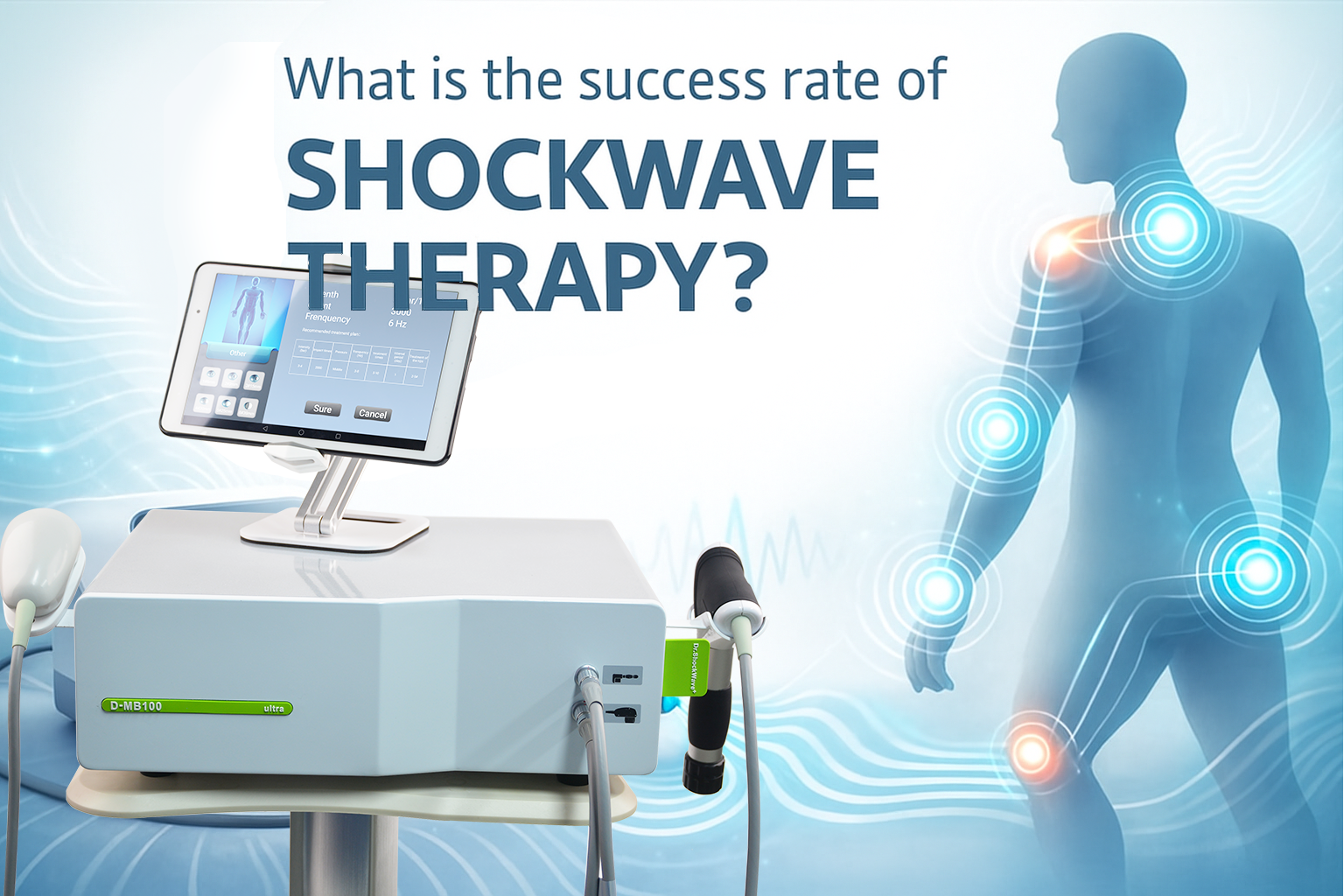
Millions of people suffering from chronic tendon pain, plantar fasciitis, or stubborn sports injuries struggle to find long-term relief. Traditional treatments often fail, leaving patients frustrated and searching for a solution that actually works.
When pain interferes with your mobility, work performance, and daily life, it can feel overwhelming. You may have tried pain medications, physical therapy, injections, or rest — yet the pain keeps returning. This cycle can be discouraging, making you question whether non-invasive options like shockwave therapy can truly deliver results.
This article gives you a professional, research-based breakdown of the success rate of Shockwave Therapy (ESWT), helping you understand its effectiveness for pain relief, tendonitis treatment, and long-term recovery.

What Is the Success Rate of Shockwave Therapy?
Shockwave therapy (ESWT) shows success rates between 65% and 90% depending on the condition treated, treatment frequency, device power level, and patient compliance with rehabilitation protocols. For common injuries such as plantar fasciitis, tennis elbow, calcific tendonitis, and Achilles tendinopathy, ESWT is clinically proven to accelerate healing, reduce pain, and improve mobility.

To help you determine whether shockwave therapy is right for your condition, the following sections break down how ESWT works, success rates by condition, clinical research findings, treatment expectations, and professional recommendations.
Table of Contents
- How Shockwave Therapy Works
- Success Rates by Injury or Condition
- Factors That Influence Success Rate
- Success Rate Comparison Table
- Clinical Benefits of ESWT
- Safety, Side Effects & Contraindications
- Frequently Asked Questions
- Conclusion & Next Steps
How Shockwave Therapy Works
Shockwave therapy uses high-energy acoustic sound waves to stimulate biological repair processes in damaged tissues. This enhances cellular metabolism, increases blood flow, breaks up calcifications, and triggers natural regeneration.
Because ESWT is non-invasive, patients experience minimal downtime and can return to physical activity shortly after treatment.
| Mechanism | Effect on the Body |
|---|---|
| Acoustic wave stimulation | Increases cell regeneration and collagen production |
| Improved circulation | Delivers oxygen and nutrients to damaged tissue |
| Pain signal disruption | Decreases nerve sensitivity and chronic inflammation |
| Micro-regeneration | Breaks down scar tissue and calcifications |
Shockwave Therapy Success Rates by Condition
Success rates vary depending on the type of condition being treated. Below is a detailed breakdown of published clinical outcomes for common injuries treated with ESWT.
Plantar Fasciitis
Success Rate: 75–90%
Shockwave therapy is considered one of the most effective non-surgical treatments for plantar fasciitis, often surpassing steroid injections and orthotics.
Tennis Elbow (Lateral Epicondylitis)
Success Rate: 70–85%
ESWT helps reduce inflammation and promotes tendon repair, giving long-term pain relief for chronic cases.
Achilles Tendinopathy
Success Rate: 65–80%
Especially effective when combined with a structured rehabilitation program.
Calcific Shoulder Tendonitis
Success Rate: 80–92%
Shockwave can break down calcium deposits and restore normal shoulder mobility.
Patellar Tendonitis (Jumper’s Knee)
Success Rate: 70–85%
Common among athletes; ESWT accelerates healing and supports return to sport.
Factors That Influence the Success Rate of ESWT
Several variables determine how effective shockwave therapy will be for each individual:
- Injury severity and duration — chronic injuries often require more sessions
- Energy level of the ESWT device — high-power machines produce faster results
- Treatment protocol — 3–6 sessions is the clinical standard
- Patient age and tissue health — healing capacity differs
- Physical therapy compliance — exercises increase success rate
- Skill of the practitioner — placement and pressure matter

Success Rate Comparison Table
| Condition | Shockwave Therapy Success Rate | Typical Sessions Required | Notes |
|---|---|---|---|
| Plantar Fasciitis | 75–90% | 3–5 | Highly responsive to ESWT |
| Tennis Elbow | 70–85% | 3–6 | Improves grip strength and mobility |
| AchiIles Tendinopathy | 65–80% | 4–6 | Best with eccentric training |
| Calcific Tendonitis | 80–92% | 3–4 | Breaks down calcium deposits |
| Patellar Tendonitis | 70–85% | 3–6 | Strong results for athletes |
Clinical Benefits of Shockwave Therapy
- Reduces chronic pain without medication
- Improves mobility and range of motion
- Accelerates tendon and tissue repair
- Breaks down scar tissue and adhesions
- Enhances athletic recovery
- Non-invasive and drug-free

Safety, Side Effects, and Contraindications
Shockwave therapy is considered extremely safe, with minimal side effects such as mild soreness, redness, or temporary swelling. These effects typically resolve within 24–48 hours.
ESWT is not recommended for patients with:
- Pregnancy
- Blood clotting disorders
- Local infections or open wounds
- Severe nerve damage
- Active cancer in the treatment area

Frequently Asked Questions
How many sessions are required?
Most patients need 3–6 sessions spaced one week apart.
Does shockwave therapy hurt?
You may feel pressure or mild discomfort, but treatments are generally well tolerated.
How soon will I see results?
Some feel relief immediately; full results appear 6–12 weeks after completing treatment.
Is shockwave therapy better than injections?
For many conditions, ESWT offers longer-lasting results without medication side effects.
Can athletes return to training quickly?
Yes. Most athletes continue training with modified intensity during therapy.
Conclusion: Is Shockwave Therapy Effective?
Shockwave therapy delivers success rates between 65% and 90% for most musculoskeletal conditions, making it one of the most reliable non-invasive treatments for chronic pain, tendon injuries, and mobility issues.
Whether you are a patient, athlete, or clinic owner, ESWT offers a proven, safe, and drug-free approach to long-term recovery. For physiotherapists, sports clinicians, and rehabilitation centers, investing in high-quality ESWT equipment can significantly improve patient outcomes and treatment satisfaction.
Explore professional Shockwave Therapy machines here:
https://buynewbelle.com/collections/shockwave-therapy-machines