
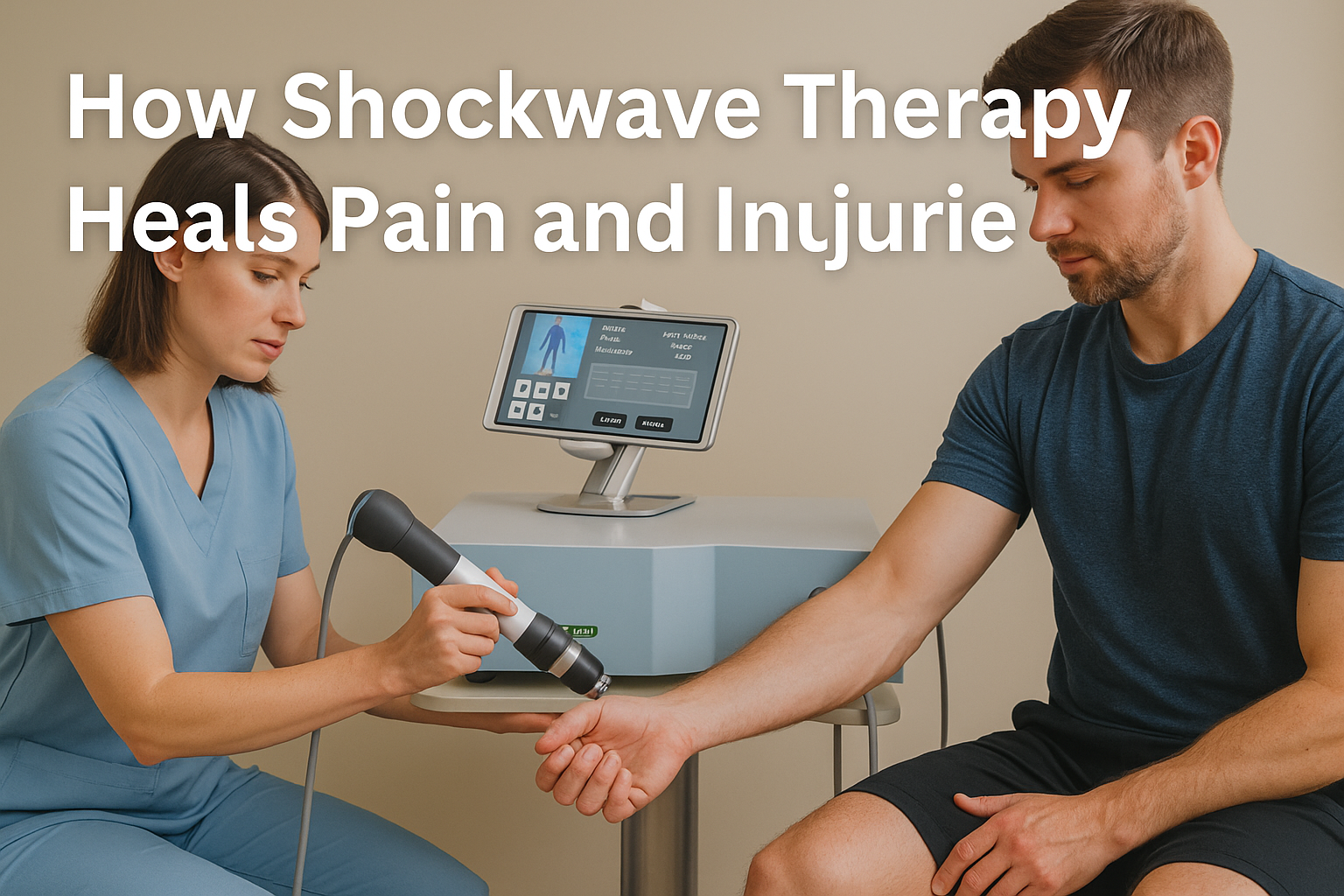
Chronic pain, tendon injuries, and stubborn musculoskeletal problems can hold patients back for months or even years. When conditions like plantar fasciitis, tennis elbow, or chronic shoulder pain refuse to respond to exercise, manual therapy, or medication, both patients and clinicians feel stuck.
Ongoing pain not only limits mobility—it interferes with work, sports performance, and daily life. Many patients struggle with recurring inflammation, scar tissue buildup, and slow tissue healing, creating a cycle of frustration. Clinicians often search for deeper solutions when conventional techniques can’t reach the underlying cause.
Shockwave Therapy (Extracorporeal Shockwave Therapy – ESWT) provides a scientifically backed method for stimulating biological repair from within. By delivering focused acoustic waves that boost blood flow, trigger cell regeneration, break apart scar tissue, and accelerate natural healing processes, ESWT helps restore function and eliminate chronic pain at its source.

How Shockwave Therapy Heals Pain and Injuries
Shockwave Therapy works by transmitting controlled acoustic waves through the skin into injured tissues. These sound waves create mechanical pressure and micro-stimulation that activate the body’s natural healing response. This process—known as mechanotransduction—is the foundation of ESWT healing mechanisms.
As the shockwaves travel into muscles, tendons, and ligaments, they improve blood circulation, stimulate collagen regeneration, reduce inflammation, and break down dense scar tissue formations. These combined effects make ESWT a powerful injury recovery treatment for both acute and chronic musculoskeletal pain. Unlike medication, which only addresses symptoms, shockwave therapy stimulates real tissue repair.

In the next sections, you’ll discover the deeper biological processes behind ESWT, the types of injuries it treats, the clinical results patients can expect, and why advanced physiotherapy shockwave devices—like the SW13 model—are becoming essential tools for rehabilitation professionals worldwide.
📌 Table of Contents
- 1. How Shockwave Therapy Heals Pain and Injuries
- 2. ESWT Healing Mechanism Explained
- 3. Injuries and Pain Conditions Treated With Shockwave Therapy
- 4. What Results Can Patients Expect?
- 5. Safety and Clinical Precautions
- 6. Key Questions Answered
- 7. Choosing a Professional Shockwave Device: SW13 Overview
- 8. Conclusion & CTA
ESWT Healing Mechanism Explained
To understand how shockwave therapy works, it’s important to look at the cascade of biological events triggered by acoustic wave stimulation. Each shockwave session delivers focused mechanical energy into the tissues, which initiates cellular processes responsible for natural healing. These effects occur at different levels—vascular, neurological, and structural.

Table 1: Core Biological Mechanisms of Shockwave Therapy
| Healing Mechanism | Description |
|---|---|
| Neovascularization | Stimulates new blood vessel formation, improving tissue oxygenation. |
| Collagen regeneration | Boosts fibroblast activity for stronger tendon and ligament repair. |
| Scar tissue breakdown | Fragmentation of calcified or fibrotic tissue for restored mobility. |
| Nerve desensitization | Reduces pain signals by lowering nerve hypersensitivity. |
| Increased cellular metabolism | Accelerates repair at the cellular level. |
What makes ESWT unique is that it combines mechanical stimulation with regenerative medicine principles. It doesn’t mask pain—it corrects the biological root cause of injury.
Injuries and Pain Conditions Treated With Shockwave Therapy
Shockwave therapy has become one of the most widely used rehabilitation tools in sports medicine and physiotherapy because it effectively treats a wide range of chronic soft-tissue injuries. These conditions often involve poor blood flow, thickened scar tissue, or tendon degeneration—problems that ESWT directly targets.
Table 2: Conditions Successfully Treated With ESWT
| Condition | How ESWT Helps |
|---|---|
| Plantar fasciitis | Reduces heel pain by breaking down adhesions and improving circulation. |
| Tennis elbow | Stimulates tendon remodeling and reduces inflammation. |
| Achilles tendinopathy | Improves collagen regeneration and tensile strength. |
| Calcific shoulder tendinitis | Breaks down calcific deposits to restore mobility. |
| IT band syndrome | Releases tight myofascial adhesions. |
| Chronic muscle trigger points | Relieves deep spasms and discomfort. |

What Results Can Patients Expect?
Most patients experience significant improvement within three to six sessions, depending on the severity and chronicity of their condition. ESWT produces a progressive healing effect, meaning the tissues continue improving for weeks after treatment ends.
Typical shockwave pain relief benefits include:
- Reduced inflammation and swelling
- Decreased chronic pain levels
- Improved tendon and ligament function
- Restored mobility and range of motion
- Faster injury recovery without surgery
Safety and Clinical Precautions
Shockwave Therapy is considered one of the safest non-invasive treatments for musculoskeletal pain. When administered by trained professionals, the risk of complications is extremely low. Most patients tolerate treatment well, with mild temporary soreness being the most common side effect.
Table 3: ESWT Safety Overview
| Safety Factor | Details |
|---|---|
| Non-invasive | No surgery, no anesthesia, no downtime. |
| Low side effects | Mild soreness or redness resolves within 24–48 hours. |
| Suitable for athletes | Allows continued training during rehabilitation. |
| Minimal contraindications | Not recommended for pregnancy, active infection, or coagulation disorders. |
Key Questions Answered
1. How does shockwave therapy actually heal injuries?
It activates biological repair by increasing blood flow, stimulating cellular regeneration, enhancing collagen production, and breaking down scar tissue.
2. Is it effective for chronic pain?
Yes. ESWT is highly effective for long-term tendon pain, plantar fasciitis, joint discomfort, and repetitive strain injuries.
3. How many sessions are needed?
Most patients improve within 3–6 sessions, depending on injury severity.
4. Is a physiotherapy shockwave device suitable for clinics?
Absolutely. Devices such as the NEWBELLE SW13 provide professional-grade performance, durability, and customizable treatment levels for physiotherapists and sports medicine specialists.
Product link: SW13 Shockwave Therapy Machine

Choosing a Professional Shockwave Device: The SW13 Advantage
For rehabilitation centers and physiotherapy practices, choosing the right shockwave system is essential. The NEWBELLE SW13 Pneumatic Ballistic Shockwave Therapy Machine offers powerful energy output, stable performance, and a durable design built for continuous clinical use.
As a manufacturer with five production lines and global export experience, NEWBELLE supplies high-quality, customizable devices trusted by medical professionals in the United States, Canada, Europe, Korea, and Australia.
Conclusion
Shockwave Therapy (ESWT) has transformed modern rehabilitation by offering a non-invasive, highly effective method for healing chronic pain and stubborn injuries. Through increased blood flow, scar tissue breakdown, cellular activation, and enhanced collagen repair, ESWT provides meaningful and lasting improvement where other treatments fall short.
Whether you are a patient seeking long-term pain relief or a professional searching for reliable rehabilitation technology, a high-quality physiotherapy shockwave device is a valuable investment.
👉 Explore the NEWBELLE SW13 Shockwave Therapy Machine:
Click here to learn more