
How to Choose a Pressotherapy Machine for Your Spa (2026 Buyer's Guide)
A practical, no-hype guide for spa, clinic and recovery-studio owners — how to compare air-compression machines by chambers, pressure, suit quality, noise and ROI, and what the research actually supports.
The short answer
A good professional pressotherapy machine comes down to six things — don't get distracted by big claims:
- Multi-chamber sequential sleeves (not single-bag) for a proper distal-to-proximal wave.
- Adjustable pressure (several levels) and multiple modes so you can tailor sessions.
- A durable, professional-grade suit that survives daily back-to-back use.
- A quiet pump — noise ruins the spa experience and is easy to overlook online.
- Sizing flexibility (e.g., width extenders) so you can treat plus-size clients.
- Real warranty, training and support — and the right certification for your market.
Expect to pay roughly $500–$1,500 for a solid professional unit. Most spas recover the cost within a few dozen sessions because consumable cost is near zero.
Pressotherapy — also called air-compression or lymphatic-drainage therapy — is one of the easiest high-margin services to add to a spa, beauty clinic or recovery studio. The machine does the work hands-free while your staff handle other clients, and there are no gels or cartridges to buy. But "air-compression machine" covers everything from $150 home gadgets to $3,000 professional systems, and the spec sheets all look similar. This guide explains what actually separates a professional unit from a toy, what the research genuinely supports, and how to match a machine to your client base.

What pressotherapy actually does
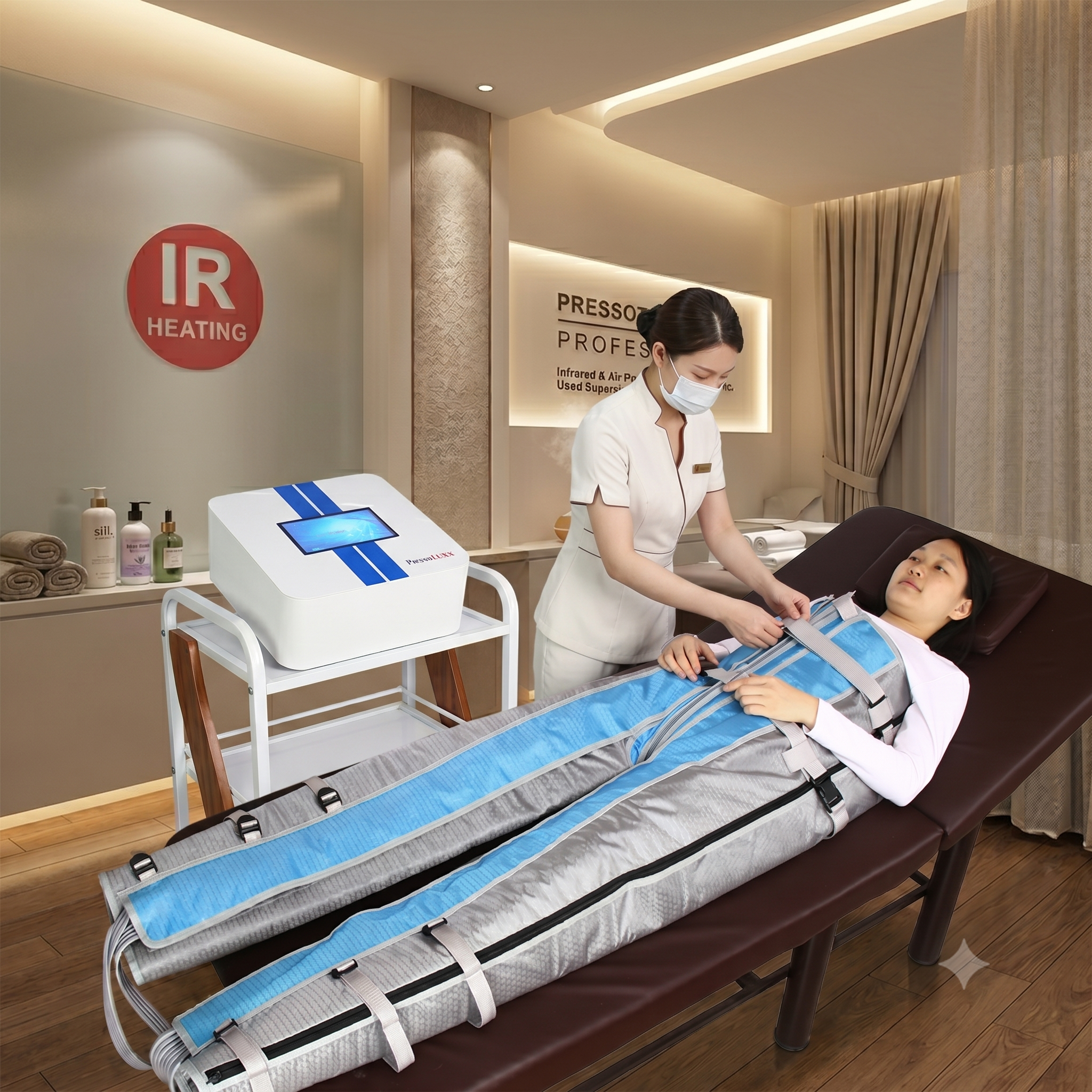
A pressotherapy machine inflates and deflates multi-chamber sleeves (usually leg, waist and foot sections) in a rhythmic, sequential pattern — a peristaltic-like wave that moves from the feet upward. The goal is to support venous and lymphatic return, encourage local circulation, and help reduce the feeling of heavy, swollen legs. In practice, spas use it for four main service types:
- Lymphatic-drainage & detox programs (often an add-on to body treatments)
- Leg-fatigue & circulation sessions for clients who stand all day
- Sports recovery for gyms, athletes and recovery studios
- Relaxation & wellness as a comfortable, hands-free standalone service
What the research actually supports
It's worth knowing what's genuinely backed by studies — both to set client expectations and to keep your own marketing honest. The evidence below is for the intermittent pneumatic compression (IPC) category, not any single machine.
Lymphatic drainage & swelling: supportive but protocol-dependent
- A 2018 systematic review found moderate-quality evidence for meaningful outcomes with sessions of 45–60 minutes at pressures around 30–60 mmHg in sequential programs. A 2021 trial showed IPC reduced lower-limb volume and improved quality of life — with sequencing that mimics manual lymphatic drainage working best.
- The honest caveat: effects are often transient (volume can rebound after sessions stop, so regular treatment matters), and some meta-analyses find no clear benefit over standard care alone. Results vary by condition and protocol.
Sources: IPC dosage systematic review 2018 (PMID 30339493); lower-limb IPC trial 2021 (PMID 34883036); mixed-result meta-analysis (PMID 24732640).
Sports recovery: helps how clients feel, modest on hard metrics
- A 2024 systematic review & meta-analysis (17 studies) found lower-limb IPC gives a trivial-to-small benefit for muscle function and a trivial-to-moderate effect on perceived soreness, with variable effects on muscle-damage markers. Common protocols: ~20–30 min at ~80 mmHg.
Source: lower-limb IPC sports-recovery review (PMC11475002).
6 things that separate a professional unit from a toy
1. Chambers & sequencing
Cheap units use one or two big air bags that squeeze all at once. Professional machines use multiple chambers that inflate sequentially from the feet up, producing the directional wave that drainage protocols rely on. Ask how many chambers and whether it's truly sequential.
2. Pressure range & modes
You want several adjustable pressure levels and more than one inflate/deflate mode, so you can run a gentle drainage program for one client and a firmer recovery session for the next. A single fixed pressure is a red flag for professional use.
3. Suit quality & sizing
The suit is the part that wears out. Professional-grade fabric survives constant use; thin home-grade material doesn't. Just as important: can it fit larger clients? Optional width extenders mean you don't turn plus-size customers away.
4. Pump noise
Rarely mentioned in listings, instantly obvious in the room. A loud pump undermines the calm you're selling. A quiet, low-noise pump is a genuine professional differentiator — ask, or check a video with sound.
5. Heating option
Some units offer infrared heating in the suit for added comfort. If you go this route, look for carbon-fiber heating elements — more even and more durable than ordinary resistance wire.
6. Certification, warranty & support
For the EU, confirm CE + RoHS. Everywhere, check the warranty length, whether training is included, and how fast you can get spare parts — downtime on a paid service is expensive. Buying from the manufacturer usually means better support and pricing.

Home vs. professional: a quick comparison
| Factor | Home / budget gadget | Professional unit |
|---|---|---|
| Chambers | 1–2 bags, squeeze together | Multi-chamber, sequential wave |
| Pressure | Fixed or 2–3 steps | Multiple adjustable levels |
| Modes | Usually one | Several inflate/deflate modes |
| Suit | Thin, wears quickly | Durable, made for daily use |
| Sizing | One size | Standard + optional extenders |
| Noise | Often loud | Quiet pump options |
| Support | Little to none | Warranty, training, spare parts |
| Typical price | ~$150–$400 | ~$500–$1,500+ |
Doing the ROI math
A professional pressotherapy unit typically costs $500–$1,500. If a drainage or recovery session retails at $40–$90 — often sold as packages or add-ons — many spas recover the device cost within roughly 8–25 sessions. With no consumables (no gels, no cartridges) and hands-free operation, almost everything after payback is margin. The best part: it runs while your staff serve other clients, so it adds revenue without adding labor.
Where the SA06B fits
If you want a professional unit that ticks the six boxes above without a premium-tower price, our SA06B Pressotherapy Machine is built for exactly this profile: multi-chamber sequential sleeves, 9 pressure levels and 4 modes, a durable professional suit, a quiet low-noise pump, optional width extenders for plus-size clients, and an optional infrared-heated version with carbon-fiber elements. It's CE + RoHS certified, dual-voltage with US/EU/UK/AU plugs, carries a 2-year warranty with free training, and ships worldwide (DDP available to the EU, including Italy).
You can also browse our full pressotherapy machine collection.
Not sure which configuration fits your spa?
We're the manufacturer — tell us your services and client base, and we'll give you a straight answer.
Talk to NEWBELLE →Frequently asked questions
What is the best pressotherapy machine for a small spa?
For most spas, a mid-range professional unit with multi-chamber sequential sleeves, several pressure levels and modes, a durable suit and a quiet pump hits the sweet spot — enough capability for real results without a premium-tower price. Prioritise suit quality, sizing flexibility and support over headline specs.
How much does a professional pressotherapy machine cost?
Roughly $500–$1,500 for a solid professional unit, with premium multi-program systems costing more. Factor in warranty, training and spare-parts support — not just the sticker price. Consumable cost is essentially zero, which helps ROI.
Does pressotherapy cause weight loss?
No. The research supports it for helping lymphatic flow, reducing limb swelling and easing perceived soreness — but it is not a weight-loss treatment. Effects are often temporary and benefit from regular sessions. Position it as wellness, recovery and comfort.
How long does a session take, and is it hands-free?
Typically 20–45 minutes depending on the program. It's hands-free — once the client is in the suit and the program is running, staff can attend to others, which is part of what makes it efficient for a spa.
Who should not use pressotherapy?
Avoid use with pregnancy, known or suspected blood clots (DVT), severe cardiovascular or arterial disease, active infection or open wounds in the area, and similar conditions. Always screen clients first and refer to a physician when in doubt — this is essential for compression therapy specifically.
What certification should it have for the EU?
Look for CE and RoHS compliance for sale and professional use in the EU, including Italy. Whatever the certification, keep your clinic's marketing claims within what that classification supports.
This article is general educational information for aesthetic and wellness professionals and is not medical advice. Clinical references describe the intermittent pneumatic compression category and the devices studied; they are not performance claims for any individual product. Always operate equipment per your training and local regulations.