
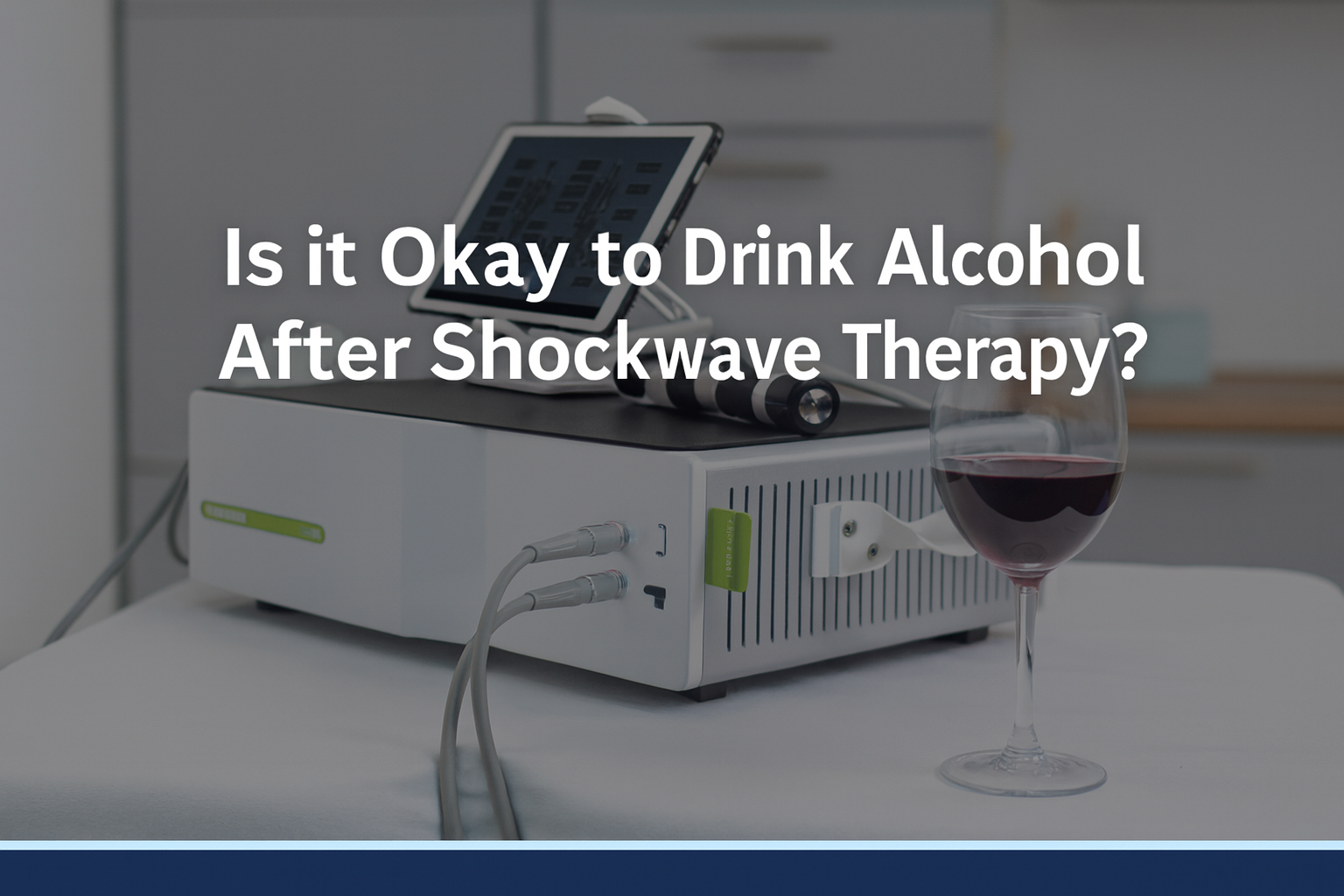
You’ve finally taken a proactive step to deal with your pain: you scheduled Shockwave Therapy (ESWT – Extracorporeal Shockwave Therapy). The session is done, your therapist has given you some instructions… and now real life shows up: dinner with friends, a glass of wine at home, or a weekend party. You start to worry: is it actually safe to drink alcohol after shockwave therapy? No one wants to accidentally slow down healing or waste an expensive treatment session just for a drink.
It’s best to avoid alcohol for at least 24–48 hours after shockwave therapy. Alcohol after shockwave therapy can interfere with circulation, inflammation control, tissue repair, sleep quality, and pain perception. While one small drink might not completely erase the benefits, regular or heavy drinking in the early recovery window can reduce the positive effects of ESWT and increase the risk of soreness or delayed healing. For the safest and fastest recovery after shockwave, most post-treatment guidelines recommend minimizing or skipping alcohol, especially right after your session.
In the rest of this guide, we’ll explain why alcohol and ESWT don’t mix well, what time frames matter most, and how to make smart choices without feeling completely restricted. If you’ve ever felt unsure about shockwave therapy precautions or ESWT aftercare, you’ll find clear, practical answers here—written for patients, injury-recovery clients, and physiotherapy users just like you.

Before we dive into details, let’s outline the key questions this article will answer for you:
- What does shockwave therapy actually do inside your body?
- How does alcohol affect circulation, inflammation, and tissue repair?
- Exactly how long should you avoid alcohol after an ESWT session?
- What happens if you drink too much alcohol after shockwave therapy?
- Are occasional light drinks ever acceptable during recovery?
- What other post-treatment guidelines should you follow for the best results?

What Shockwave Therapy Does and Why Aftercare Matters
To understand why ESWT aftercare is so important, it helps to know what happens during a treatment. Shockwave therapy uses focused acoustic waves that travel through the skin and into deeper tissues. These waves:
- Increase local blood flow and microcirculation.
- Stimulate cellular activity and tissue regeneration.
- Break up small calcifications in tendons or soft tissues.
- Trigger controlled micro-inflammation that launches a healing response.
- Modulate pain signals so you feel less discomfort over time.
In simple terms, your therapist uses shockwave technology to “wake up” a stubborn or chronically injured area—often a tendon, fascia, or bone interface—that has stopped healing on its own. ESWT doesn’t just mask symptoms; it aims to restart the repair process. Because of this, the hours and days immediately after treatment are critical. Your lifestyle choices during this period strongly influence how well your body responds.

This is where alcohol becomes an issue. Anything that interferes with circulation, inflammation balance, or deep sleep can reduce the positive biological changes triggered by shockwave therapy. That’s why therapists emphasize smart post-treatment guidelines—not only about activity levels and stretching, but also about what you eat and drink.
How Alcohol Affects Healing After Shockwave Therapy
Alcohol is more than just a social drink—it’s a substance that influences nearly every system involved in healing. When you consume alcohol after shockwave therapy, several things happen in your body:
- Blood flow changes: Alcohol can cause temporary blood vessel dilation, followed by constriction. This can disrupt the steady circulation needed for tissue repair after ESWT.
- Inflammation is altered: Shockwave therapy intentionally triggers a controlled inflammatory response. Alcohol, especially in higher amounts, can either exaggerate or blunt this response, making it less efficient.
- Cellular repair slows down: Your body prioritizes clearing alcohol as a toxin, diverting resources away from regenerative processes.
- Sleep quality drops: Even if you fall asleep faster with alcohol, the deep, restorative sleep stages get shorter—exactly when recovery hormones and tissue repair peak.
- Pain perception changes: Alcohol can temporarily dull pain, which may encourage you to overuse or stress a freshly treated area.
Put together, these effects show why alcohol after shockwave therapy doesn’t support your goal of healing faster. You and your therapist are investing time, energy, and money into a treatment that relies on your body responding optimally. Alcohol, especially in the first 1–2 days, pushes you in the opposite direction.

Table of Contents
- What Shockwave Therapy Does and Why Aftercare Matters
- How Alcohol Affects Healing After Shockwave Therapy
- How Long to Avoid Alcohol After Shockwave Therapy
- Risks of Drinking Alcohol After ESWT
- Is Light or Occasional Drinking Ever Okay?
- Other Shockwave Therapy Precautions and Aftercare Tips
- Conclusion and Next Steps
How Long Should You Avoid Alcohol After Shockwave Therapy?
Most clinicians recommend avoiding alcohol for at least 24–48 hours after each ESWT session. This early recovery period is when the controlled micro-inflammatory response and the first waves of tissue repair are most active. Giving your body clean conditions—good hydration, good sleep, and no chemical stress—allows those processes to work at full power.
Beyond the 48-hour mark, the recommendation often shifts from “strictly avoid” to “proceed with caution.” Light, occasional intake might be acceptable for some patients, while others—especially those with chronic injuries, systemic health issues, or heavy training loads—are better off minimizing alcohol throughout the full treatment cycle. When in doubt, your therapist or physician should make the final call based on your case.

Table 1 – Suggested Timeline for Alcohol After Shockwave Therapy
| Time After ESWT Session | Recommendation on Alcohol | Reason |
|---|---|---|
| First 0–24 hours | Strictly avoid alcohol | Early inflammatory and vascular response; body starting tissue repair. |
| 24–48 hours | Best to avoid, or discuss with clinician | Healing processes still highly active; alcohol can still disrupt circulation and sleep. |
| 48–72 hours | Light use only if approved | Body stabilizing; still safer to limit intake while treatment cycle continues. |
| After 72 hours | Occasional moderate drinking, case-dependent | Some healing complete, but repeated ESWT sessions may still be scheduled. |
What Are the Risks of Drinking Alcohol After Shockwave Therapy?
Understanding concrete risks can make your decision easier. Drinking alcohol after shockwave therapy can lead to both short-term and longer-term problems:
- Increased soreness or bruising: Alcohol can thin the blood and influence clotting, which may worsen bruising in the treated area.
- Slower progress over multiple sessions: If you drink heavily after each visit, you may notice weaker improvements compared to patients who follow stricter ESWT aftercare.
- Overuse of the treated area: Feeling “relaxed” or slightly numb from alcohol may tempt you to stand, walk, lift, or train more than advised.
- Interactions with medication: Many patients also take anti-inflammatories, painkillers, or other drugs; mixing these with alcohol increases liver load and side-effect risks.
- Compromised decision-making: You may ignore other shockwave therapy precautions like rest, icing (if recommended), or activity restrictions.

Table 2 – Alcohol vs. Key Recovery Factors After Shockwave Therapy
| Recovery Factor | How ESWT Helps | How Alcohol Can Interfere |
|---|---|---|
| Blood Flow | Improves circulation to injured tissues. | Causes unstable vasodilation/constriction; may reduce consistent perfusion. |
| Inflammation | Creates a targeted, controlled inflammatory response to trigger healing. | Alters inflammatory mediators, potentially blunting or exaggerating the response. |
| Tissue Regeneration | Stimulates cell signaling and repair mechanisms. | Body prioritizes metabolizing alcohol over regeneration. |
| Sleep and Recovery Hormones | Good sleep supports hormone balance and repair. | Reduces deep sleep, disrupts REM cycles, lowers recovery quality. |
| Pain Management | Gradually reduces pain via neuromodulation. | Temporary numbing may hide pain and lead to overloading tissues. |
Is Light or Occasional Drinking Ever Okay During ESWT?
Many patients ask if they must completely avoid alcohol throughout an entire course of shockwave therapy, which may last several weeks. For most otherwise healthy adults, light, occasional drinking away from treatment days is unlikely to ruin results, especially if:
- Your clinician has cleared it based on your medical history.
- You respect the 24–48 hour no-alcohol window after each session.
- You stay within recommended “moderate” limits (for example, 1 drink for women and up to 2 for men on a given day, depending on local guidelines).
- You stay well hydrated and maintain healthy sleep patterns.
However, if you have liver disease, cardiovascular problems, diabetes, a history of alcohol misuse, or you take medication that interacts with alcohol, your safest option is often to avoid drinking completely during your ESWT treatment cycle. When in doubt, transparency with your physiotherapist, sports medicine doctor, or rehabilitation specialist is essential.

Table 3 – Example Alcohol Choices During a Shockwave Therapy Plan
| Scenario | Better Choice | Reason |
|---|---|---|
| Dinner the same evening after ESWT | Skip alcohol; choose water or herbal tea | Protects first 24 hours of healing. |
| Social gathering 36 hours after treatment | Limit to 1 small drink, or alcohol-free options | Body still recovering; light intake only if approved. |
| Weekend party two days before next session | Keep intake moderate, hydrate well, sleep on time | Prepares body for the upcoming ESWT session. |
| Chronic heavy drinking habit | Discuss with doctor; consider reducing or pausing | Heavy alcohol use undermines long-term recovery after shockwave. |
Other Shockwave Therapy Precautions and Aftercare Tips
Alcohol is just one part of a complete ESWT aftercare strategy. To get the best possible outcome from shockwave therapy, combine alcohol limits with these additional post-treatment guidelines:
- Follow activity instructions: Avoid high-impact sports or heavy lifting for the time period recommended by your therapist. Gentle walking or light mobility work is usually allowed.
- Hydrate generously: Water supports circulation, tissue hydration, and metabolic cleanup after treatment.
- Respect pain signals: Some mild soreness is normal, but sharp or worsening pain should be reported.
- Follow medication advice: Do not self-prescribe anti-inflammatories without approval; they can sometimes reduce the intended inflammatory effect of ESWT.
- Keep your appointments consistent: Shockwave therapy often works best as a series of sessions; skipping or spacing them out too far may reduce overall effectiveness.

Aligning your lifestyle with your treatment goals sends a powerful signal to your body—and your therapist—that you’re serious about healing. Avoiding alcohol, sleeping well, eating nutrient-dense food, and gradually returning to appropriate activity all contribute to faster, more durable results from each shockwave session.
Conclusion
So, is it okay to drink alcohol after shockwave therapy? From a recovery point of view, the safest and most effective approach is to avoid alcohol completely for 24–48 hours after each ESWT session, then keep any later drinking light and occasional—only if your health provider agrees. Your body is working hard to respond to the shockwave treatment by increasing blood flow, launching a controlled healing response, and rebuilding damaged tissue. Alcohol pulls against those efforts, especially when consumed too soon or in large amounts.
If you’ve invested in ESWT to reduce pain, restore function, and get back to sport or daily life faster, every choice counts. Treat your treatment days as “healing priority days”: hydrate, rest, nourish your body, and follow all shockwave therapy precautions. That way, each session brings you closer to your goals instead of being quietly undermined by preventable lifestyle factors like alcohol.
For clinics, physiotherapists, sports teams, and rehabilitation centers, having high-quality equipment is just as important as giving the right aftercare advice. If you are exploring professional devices to support safe, effective recovery after shockwave, you can review a full range of systems designed for pain relief, tissue regeneration, and musculoskeletal healing here:
👉 Explore NEWBELLE Shockwave Therapy Machines