
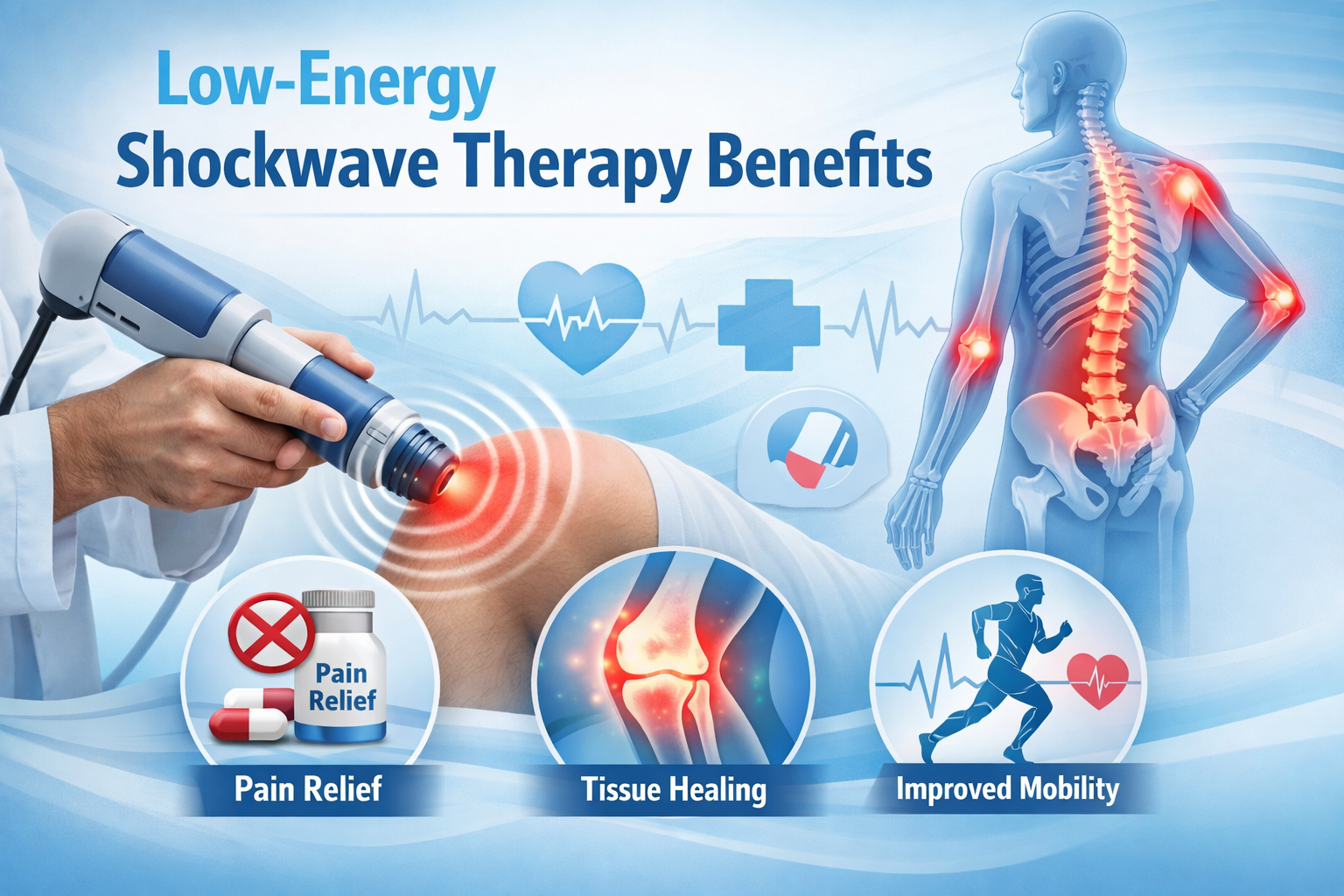
Chronic soft tissue pain, lingering inflammation, and slow recovery often leave patients searching for pain management solutions that do not involve surgery, injections, or long-term medication use. Many traditional treatments can be too aggressive, causing discomfort or downtime that interrupts daily life. Low-energy shockwave therapy has emerged as a gentle yet effective non-invasive treatment, offering a smarter way to relieve pain while supporting natural healing processes.
Low-Energy Extracorporeal Shockwave Therapy (Low-Energy ESWT) provides pain relief and promotes tissue healing by gently stimulating cellular regeneration, enhancing blood flow, and reducing inflammation without invasive procedures. Unlike high-energy approaches, low-energy shockwave therapy works within the body’s natural tolerance, making it ideal for sensitive patients, chronic soft tissue injuries, and long-term rehabilitation therapy.

What makes low-energy ESWT especially appealing is its balance between comfort and effectiveness. This therapy bridges modern medical technology with the body’s own regenerative ability, delivering consistent ESWT benefits without excessive mechanical stress.

In this article, we will answer key questions such as: What is low-energy shockwave therapy? How does low-energy ESWT differ from standard shockwave therapy? What conditions benefit most from this non-invasive treatment? And why are rehabilitation clinics and physiotherapy professionals increasingly adopting low-energy ESWT?
Table of Contents
- What Is Low-Energy Shockwave Therapy
- How Low-Energy ESWT Works
- Key Benefits of Low-Energy ESWT
- Biological Effects on Soft Tissue Healing
- Conditions Treated With Low-Energy Shockwave Therapy
- Low-Energy ESWT vs High-Energy Shockwave Therapy
- What to Expect During Treatment
- Safety and Clinical Evidence
- Who Is an Ideal Candidate
- Conclusion and Next Steps
What Is Low-Energy Shockwave Therapy
Low-energy shockwave therapy is a specialized form of extracorporeal shockwave therapy designed to deliver lower-intensity acoustic waves to injured or painful tissue. This approach focuses on gradual stimulation rather than aggressive mechanical impact, making it well suited for chronic pain management, rehabilitation therapy, and patients who prefer gentle non-invasive treatment options.

How Low-Energy ESWT Works
Low-energy ESWT transmits controlled acoustic waves through the skin into targeted soft tissues. These waves create subtle mechanical stimulation at the cellular level, triggering biological responses without causing discomfort or tissue damage. The body responds by increasing blood circulation, activating cellular repair mechanisms, and reducing inflammatory mediators.
| Mechanism | Physiological Response | Therapeutic Benefit |
|---|---|---|
| Low-Intensity Acoustic Waves | Cellular activation | Gentle tissue regeneration |
| Microcirculation Stimulation | Improved oxygen delivery | Enhanced soft tissue healing |
| Inflammation Modulation | Reduced pain signaling | Long-lasting pain relief |
Key Benefits of Low-Energy ESWT
The primary ESWT benefits of low-energy shockwave therapy include effective pain management, improved tissue elasticity, and accelerated healing without discomfort. Because treatment intensity is lower, patients often tolerate sessions extremely well, making it suitable for repeated use during long-term rehabilitation programs.

Biological Effects on Soft Tissue Healing
Low-energy shockwave therapy promotes soft tissue healing by stimulating collagen synthesis, encouraging angiogenesis, and supporting cellular metabolism. These biological effects help restore tissue structure and function while minimizing stress on surrounding areas.
| Biological Effect | Description | Clinical Impact |
|---|---|---|
| Collagen Remodeling | Improved fiber alignment | Stronger, more flexible tissue |
| Angiogenesis | New blood vessel formation | Faster recovery |
| Inflammation Reduction | Lower cytokine activity | Sustained pain relief |
Conditions Treated With Low-Energy Shockwave Therapy
Low-energy ESWT is commonly used for plantar fasciitis, Achilles tendinopathy, patellar tendinitis, shoulder pain, myofascial trigger points, and other chronic soft tissue injuries. Rehabilitation clinics value this non-invasive treatment for its versatility and patient-friendly experience.
| Condition | Treatment Goal | Expected Outcome |
|---|---|---|
| Plantar Fasciitis | Reduce chronic inflammation | Improved walking comfort |
| Tendinopathy | Stimulate healing | Reduced pain and stiffness |
| Myofascial Pain | Release trigger points | Improved mobility |
Low-Energy ESWT vs High-Energy Shockwave Therapy
While high-energy shockwave therapy is effective for breaking calcifications and treating severe pathology, low-energy shockwave therapy focuses on comfort, gradual healing, and long-term rehabilitation therapy. This makes low-energy ESWT particularly suitable for chronic conditions, sensitive patients, and early-stage musculoskeletal disorders.

What to Expect During Treatment
A low-energy shockwave therapy session typically lasts 10 to 20 minutes. Patients usually experience minimal discomfort, and no anesthesia is required. Treatment plans often include multiple sessions over several weeks, allowing cumulative biological effects to support lasting pain management.
Safety and Clinical Evidence
Clinical studies support the safety and effectiveness of low-energy ESWT as a non-invasive treatment. Side effects are rare and mild, usually limited to temporary redness or warmth at the treatment site. Its favorable safety profile makes it an excellent option for long-term rehabilitation therapy.
Who Is an Ideal Candidate
Patients seeking non-invasive pain relief, individuals with chronic soft tissue injuries, and those undergoing physiotherapy or rehabilitation programs benefit significantly from low-energy shockwave therapy. Physiotherapy professionals and rehabilitation clinics also appreciate its adaptability and patient satisfaction outcomes.
Conclusion
Low-Energy Extracorporeal Shockwave Therapy represents a refined approach to pain management and soft tissue healing. By gently stimulating cellular regeneration, enhancing blood flow, and reducing inflammation, low-energy ESWT delivers reliable results without invasive procedures.
For clinics and healthcare professionals looking to integrate advanced low-energy shockwave therapy into their services, choosing dependable equipment is essential. Explore professional shockwave therapy systems engineered for consistent performance and patient comfort.