
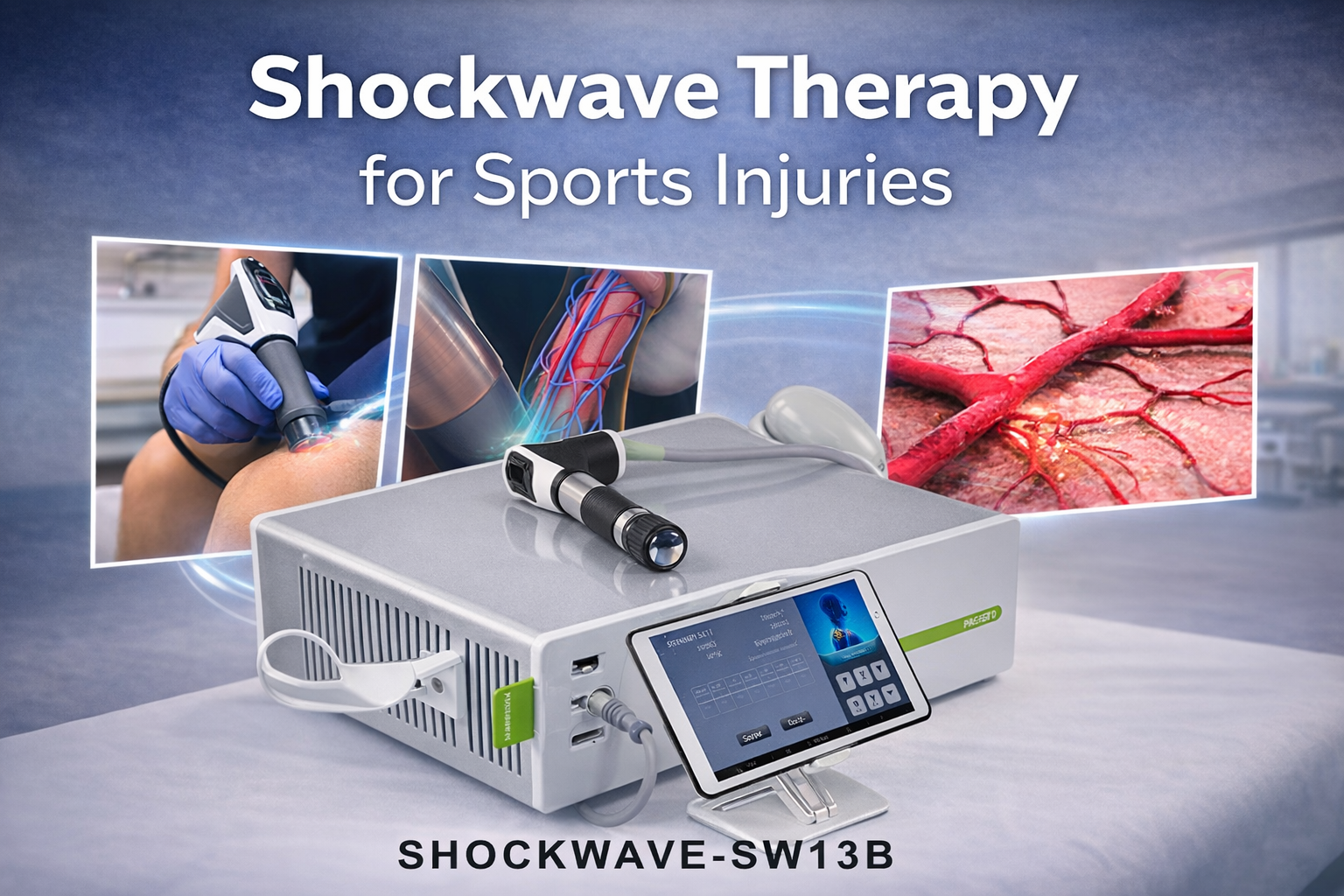
Sports injuries can derail training schedules, compromise performance, and place athletes at constant risk of reinjury when recovery is incomplete. Conventional pain treatments often rely on rest, medication, or invasive procedures that fail to address underlying tissue damage. Shockwave therapy has emerged as a powerful, non-invasive pain treatment that helps athletes recover faster while restoring mobility and strength at the source of injury.
Extracorporeal Shock Wave Therapy (ESWT) accelerates recovery from sports injuries by reducing pain, stimulating tissue repair, increasing blood circulation, and enhancing mobility without surgery. By delivering targeted acoustic waves into injured tendons, muscles, and connective tissue, shockwave therapy activates the body’s natural healing response and supports safe, efficient athletic recovery.

What makes shockwave therapy especially valuable in sports medicine is its ability to shorten recovery timelines while maintaining performance integrity. From professional athletes to recreational sports injury patients, ESWT bridges advanced rehabilitation science with real-world results.

In this article, we will answer critical questions including: How does shockwave therapy work for sports injuries? Which athletic conditions benefit most from ESWT? How does shockwave therapy compare with other non-invasive pain treatment options? And why are sports medicine clinics increasingly adopting ESWT for tendon injuries and musculoskeletal recovery?
Table of Contents
- What Is Shockwave Therapy for Sports Injuries
- How ESWT Works in Athletic Recovery
- Key Benefits of Shockwave Therapy for Athletes
- Biological Effects on Tendons and Muscles
- Common Sports Injuries Treated With ESWT
- Shockwave Therapy vs Traditional Sports Injury Treatments
- What to Expect During Shockwave Therapy
- Safety and Clinical Evidence in Sports Medicine
- Who Is an Ideal Candidate
- Conclusion and Next Steps
What Is Shockwave Therapy for Sports Injuries
Shockwave therapy is a non-invasive treatment that uses high-energy acoustic waves to treat musculoskeletal injuries commonly seen in sports. Originally developed for urological applications, ESWT is now widely used by physiotherapists, orthopedic specialists, and sports medicine clinics to manage chronic and acute sports injuries without surgery.

How ESWT Works in Athletic Recovery
During shockwave therapy, controlled acoustic waves are delivered through the skin to injured tissue. These waves generate mechanical stimulation that triggers biological responses such as increased blood circulation, cellular regeneration, and metabolic activation. For athletes, this process restores tissue integrity while minimizing downtime.

| Mechanism | Physiological Response | Benefit for Athletes |
|---|---|---|
| Acoustic Wave Stimulation | Microcirculation improvement | Faster recovery time |
| Mechanical Stress | Growth factor release | Enhanced tissue repair |
| Nerve Modulation | Pain signal reduction | Improved training tolerance |
Key Benefits of Shockwave Therapy for Athletes
Shockwave therapy delivers multiple benefits essential to athletic recovery. These include rapid pain reduction, improved joint mobility, and restoration of functional strength. Because ESWT is a non-invasive pain treatment, athletes can often continue light training while undergoing therapy.

Biological Effects on Tendons and Muscles
Sports injuries frequently involve tendon injuries and muscle overuse. ESWT stimulates collagen synthesis, promotes angiogenesis, and breaks down fibrotic tissue that restricts movement. These biological effects help athletes regain flexibility, power, and coordination.
| Biological Effect | Description | Impact on Performance |
|---|---|---|
| Collagen Remodeling | Improved fiber alignment | Stronger tendons |
| Neovascularization | New blood vessel formation | Enhanced endurance |
| Inflammation Reduction | Lower cytokine levels | Reduced reinjury risk |
Common Sports Injuries Treated With ESWT
Shockwave therapy is widely used to treat plantar fasciitis, Achilles tendinopathy, patellar tendinitis, tennis elbow, shoulder overuse injuries, and chronic muscle strains. Sports medicine clinics rely on ESWT to manage both acute injuries and long-standing conditions.
| Sports Injury | Treatment Focus | Expected Outcome |
|---|---|---|
| Achilles Tendinopathy | Tendon regeneration | Improved push-off strength |
| Plantar Fasciitis | Inflammation control | Pain-free running |
| Tennis Elbow | Soft tissue repair | Restored grip power |
Shockwave Therapy vs Traditional Sports Injury Treatments
Compared to rest-only protocols, injections, or surgical interventions, shockwave therapy offers a balanced approach to sports injury rehabilitation. ESWT treats the root cause of pain rather than masking symptoms, allowing athletes to recover more efficiently and safely.
What to Expect During Shockwave Therapy
A typical shockwave therapy session lasts between 10 and 20 minutes. Athletes may feel mild discomfort, but treatment does not require anesthesia. Most rehabilitation protocols involve three to six sessions, with progressive improvement as tissue healing continues.
Safety and Clinical Evidence in Sports Medicine
Extensive clinical studies support the safety and effectiveness of ESWT for sports injuries. Side effects are minimal and temporary, often limited to mild redness or soreness. These characteristics make shockwave therapy a trusted option in high-performance athletic environments.
Who Is an Ideal Candidate
Athletes with chronic tendon injuries, sports injury patients seeking non-invasive pain treatment, and individuals who have not responded to traditional physiotherapy benefit significantly from shockwave therapy. Sports medicine clinics and physiotherapists also value ESWT for its efficiency and patient satisfaction.

Conclusion
Shockwave therapy has become an essential tool in modern sports injury rehabilitation. By accelerating tissue repair, improving blood circulation, and reducing pain without surgery, ESWT supports faster, safer athletic recovery and long-term performance.
For sports medicine clinics and rehabilitation professionals seeking reliable shockwave therapy solutions, choosing high-quality equipment is critical. Discover portable and professional shockwave therapy systems designed for athletic recovery and clinical excellence.