
Chronic pain from tendons, muscles, and joints can slowly take over your life. When walking, lifting, running, or even sleeping hurts, every day becomes a negotiation with your own body. Many patients cycle through rest, medication, injections, and endless exercises without lasting relief.
This constant pain doesn’t just limit movement — it drains energy, affects work and sport performance, and erodes confidence. When traditional treatments fail, people are left wondering if surgery is the only option, or if they simply have to “live with it.”
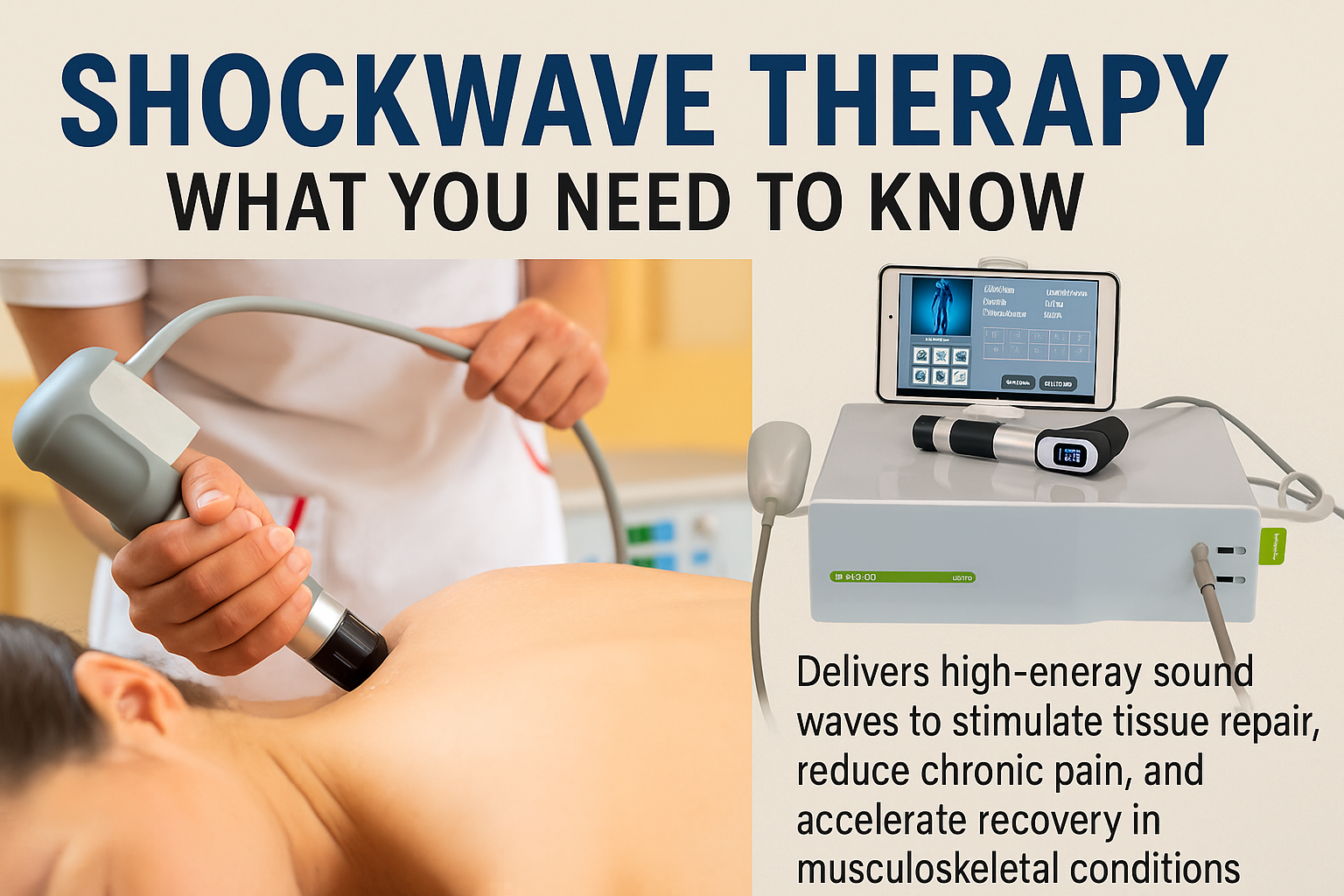
Shockwave therapy (also known as ESWT – Extracorporeal Shock Wave Therapy) delivers high-energy sound waves through the skin to painful or injured tissue. This non-invasive physiotherapy device technology is designed to stimulate tissue repair, reduce chronic pain, and accelerate recovery in musculoskeletal conditions, offering a meaningful alternative before considering surgery.

Shockwave therapy is a non-surgical medical treatment that uses focused or radial acoustic (sound) waves to treat chronic soft-tissue problems such as tendinopathies, plantar fasciitis, muscle trigger points, calcific shoulder tendinitis, and other stubborn musculoskeletal conditions. In a typical session, a therapist uses a handheld shockwave applicator connected to a physiotherapy device (such as the NEWBELLE SW13B shockwave therapy machine) to deliver controlled pulses into the affected area. These pulses create mechanical stimulation in the tissues, which increases blood flow, activates cellular repair processes, reduces pain signalling, and supports tendon healing and muscle recovery over the weeks that follow.

In simple terms, what you need to know about shockwave therapy is this: it is designed to help your body heal itself faster and more effectively. Instead of masking symptoms, ESWT tries to restart or accelerate the natural repair cycle in damaged tissues. When combined with a structured rehabilitation program, shockwave therapy can be a powerful tool for long-term pain relief and functional recovery — whether you are a patient, a physiotherapist, a chiropractor, a sports medicine clinician, or a rehabilitation center looking to upgrade your treatment options.

Before deciding if shockwave therapy is right for you or your clinic, there are several important questions that deserve clear, honest answers:
- How exactly does shockwave therapy (ESWT) work inside tendons and muscles?
- Which conditions respond best to shockwave therapy, and who is an ideal candidate?
- What does a typical treatment session feel like, and how many sessions are usually required?
- Are there risks or side effects, and how safe is ESWT compared with other options?
- How does a professional physiotherapy device like the NEWBELLE SW13B fit into modern rehabilitation practice?
- What results can patients realistically expect in terms of pain relief, tendon healing, and muscle recovery?
Table of Contents
- 1. What Is Shockwave Therapy (ESWT)?
- 2. How Shockwave Therapy Works in the Body
- 3. Conditions Treated: When Shockwave Therapy Makes Sense
- 4. Key Benefits for Patients and Clinics
- 5. Treatment Protocols: What to Expect in a Session
- 6. Choosing a Professional Physiotherapy Device (NEWBELLE SW13B)
- 7. Safety, Side Effects, and Contraindications
- 8. Frequently Asked Questions
- 9. Conclusion & Call to Action
What Is Shockwave Therapy (ESWT)?
Extracorporeal Shock Wave Therapy, usually shortened to ESWT or simply “shockwave therapy,” is a technology originally developed in medicine to break up kidney stones. Over the past several decades, it has been refined and adapted for orthopedics, sports medicine, and physical therapy to treat chronic tendon and muscle problems. Instead of surgery or injections, ESWT uses short, high-energy pulses of sound delivered from outside the body (extracorporeal) into targeted tissues.

Two main types of shockwave therapy are used in musculoskeletal rehabilitation:
- Radial shockwave: Energy disperses radially (outward) from the applicator tip, ideal for broader or more superficial structures such as plantar fascia or lateral elbow.
- Focused shockwave: Energy is concentrated at a specific depth below the skin, useful for deeper or precisely located lesions.
Many modern physiotherapy devices, including pneumatic radial systems like the NEWBELLE SW13B, are designed for versatile, high-volume use in clinics and rehabilitation centers, offering adjustable energy and frequency settings to match different body regions and patient tolerances.

| Type of ESWT | Energy Pattern | Typical Uses |
|---|---|---|
| Radial Shockwave | Energy spreads outward from applicator; more superficial | Plantar fasciitis, lateral epicondylitis, patellar tendinopathy, myofascial trigger points |
| Focused Shockwave | Energy converges at a focal point at a specific depth | Deeper tendon insertions, non-union fractures, calcific deposits, research settings |
How Shockwave Therapy Works in the Body
At a biological level, shockwave therapy works by creating controlled mechanical stress in the tissues. Each high-energy sound wave causes tiny, carefully targeted micro-traumas in the tendon or muscle. Far from being harmful, this micro-trauma is what restarts the body’s stalled healing response in chronic conditions. Studies have shown that ESWT can:
- Increase local blood flow and stimulate new capillary formation (angiogenesis).
- Promote collagen synthesis and improved tendon structure.
- Disrupt calcific deposits in tendons, allowing the body to reabsorb them.
- Modulate pain signalling by affecting nerve fibers and reducing inflammatory mediators.
For patients, the experience is straightforward: gel is applied to the skin, the applicator is placed over the painful area, and a series of pulses are delivered over several minutes. Most people describe the feeling as a strong tapping or rapid percussion. Energy levels can be adjusted during the session, allowing the therapist to find a level that is therapeutically effective yet tolerable.
Importantly, the benefit of shockwave therapy is not always immediate. While some patients feel pain relief within days, the full effect often develops gradually over 4–12 weeks as tissue repair processes continue. For tendinopathy and long-standing muscle problems, this slower but deeper improvement is often what makes ESWT so valuable compared with short-term symptom relief methods.
| Biological Effect | Clinical Relevance |
|---|---|
| Increased blood flow and neovascularization | Improves oxygen and nutrient delivery to damaged tissues, supporting tendon healing and muscle recovery. |
| Stimulation of collagen production | Enhances tendon structure, making tissues stronger and more resilient to load. |
| Disruption of calcific deposits | Helps break up calcium build-up in tendons (e.g., calcific shoulder tendinitis), which can reduce pain and improve range of motion. |
| Pain modulation | Reduces pain receptor sensitivity and inflammatory signals, contributing to lasting pain relief. |
Conditions Treated: When Shockwave Therapy Makes Sense
Shockwave therapy is primarily used for chronic musculoskeletal conditions that have not responded sufficiently to rest, medication, or conventional physiotherapy. It is especially effective in tendinopathies and overload injuries where tissue degeneration, not acute inflammation, is the main issue.

Common indications include:
- Plantar fasciitis and heel pain.
- Achilles tendinopathy (mid-portion or insertional).
- Patellar tendinopathy (jumper’s knee).
- Lateral epicondylitis (tennis elbow) and medial epicondylitis (golfer’s elbow).
- Proximal hamstring tendinopathy and gluteal tendinopathy.
- Calcific rotator cuff tendinitis and shoulder impingement-related tendon pain.
- Chronic myofascial trigger points and muscle tightness.
| Condition | Primary Goals of ESWT | Typical Outcome |
|---|---|---|
| Plantar fasciitis | Reduce heel pain, improve morning stiffness, restore walking tolerance | Significant pain reduction and better function within weeks to months |
| Achilles tendinopathy | Decrease tendon pain, improve calf strength, enable return to sport | Improved pain and functional scores, better tolerance to loading |
| Patellar tendinopathy | Reduce pain during squatting, jumping, and landing | Higher performance and reduced symptoms with combined rehab |
| Tennis elbow | Alleviate lateral elbow pain, improve grip strength | Improved daily function and reduced tenderness |
Clinical reviews suggest that ESWT is particularly effective for mid-portion Achilles tendinopathy and plantar fasciitis, both notoriously stubborn conditions that often frustrate patients and therapists alike.
Key Benefits for Patients and Clinics
From the patient’s perspective, the main appeal of shockwave therapy is straightforward: non-invasive treatment with promising outcomes when other options have failed. For many, ESWT offers a realistic way to achieve pain relief and return to activity without injections or surgery. For clinics, adding a high-quality ESWT physiotherapy device expands the range of services, attracts patients seeking advanced care, and can differentiate the practice from competitors.
Key benefits include:
- Non-invasive and low downtime: No anesthesia or incisions; patients typically walk out immediately after treatment.
- Evidence-based: Multiple studies and reviews support ESWT as a safe and effective modality for chronic tendinopathy and other musculoskeletal problems.
- Synergy with rehab: Works best when paired with exercise therapy, allowing therapists to integrate ESWT into broader, holistic care plans.
- Versatility: One device can be used across many body regions and diagnoses.
- Practice growth: Advanced technologies like shockwave therapy often generate word-of-mouth referrals and can justify premium treatment packages.
Treatment Protocols: What to Expect in a Session
While exact protocols vary between clinicians and devices, most shockwave therapy treatments follow a similar structure. Below is a general overview that aligns well with devices like the NEWBELLE Shockwave Therapy Machine for Physiotherapy Pain Relief – Model SW13B, which features adjustable energy (0.5–8 bar), frequency (1–21 Hz), and multiple applicator heads for different regions.
- Assessment: The clinician takes a detailed history, performs physical examination, and confirms that shockwave therapy is appropriate. Red flags, fractures, acute tears, or systemic disease must be ruled out.
- Preparation: The skin over the target area is cleaned. Ultrasound gel is applied to ensure efficient energy transfer and reduce friction.
- Parameter selection: The therapist selects the treatment program or manually sets energy (bar), frequency (Hz), and total number of pulses based on the body region and patient tolerance.
- Application: The handpiece is pressed against the skin and moved slowly over the painful area while pulses are delivered. A typical session lasts 5–15 minutes depending on the indication.
- Post-treatment advice: Patients are usually advised to avoid very heavy loading for 24–48 hours but can maintain light activities and rehabilitation exercises as instructed.
- Course of care: Many tendinopathy protocols involve 3–6 sessions, spaced 1–2 weeks apart, combined with progressive loading exercises.
Patients often notice a gradual shift: first, a reduction in pain intensity; then, easier movement and improved confidence; finally, better performance in daily activities or sport as tendon healing and muscle recovery progress.
Choosing a Professional Physiotherapy Device (NEWBELLE SW13B)
For physiotherapists, chiropractors, sports medicine clinicians, and rehabilitation centers, results depend not only on clinical skill but also on the reliability and flexibility of the ESWT device. A machine like the NEWBELLE Shockwave Therapy Machine for Physiotherapy Pain Relief – Model SW13B is designed specifically for professional, high-volume use.
Key features of the SW13B include:
- Pneumatic radial technology powered by a German Thomas compressor for stable energy output and low operating noise.
- Adjustable energy range (0.5–8 bar) and frequency (1–21 Hz), enabling customized treatment from gentle pain relief to deeper tissue stimulation.
- Multiple applicator heads and massage heads to adapt to different anatomical regions and clinical goals.
- Preset protocols for common treatment areas, supporting faster learning curve and standardized outcomes for staff across multi-therapist clinics.
- Multi-language user interface and robust construction, well suited to international clinics and long daily operating hours.
In a competitive rehabilitation market, having a dependable, customizable ESWT physiotherapy device helps clinics position themselves as providers of advanced, evidence-based pain relief and tendon healing solutions.
Safety, Side Effects, and Contraindications
One of the strengths of shockwave therapy is its safety profile. When performed by trained professionals using correct protocols, ESWT has a low risk of serious complications. The most common side effects are mild and temporary: localized soreness, redness, minor swelling, or bruising at the treatment site. These usually settle within a few days without intervention.
However, like any medical treatment, there are contraindications and situations where caution is required. Shockwave therapy is generally avoided or used with caution in patients who:
- Have bleeding disorders or are on strong blood-thinning medication.
- Are pregnant (especially over the pelvic or abdominal region).
- Have acute infections, open wounds, or tumors in the treatment area.
- Have nerve disorders or severe sensory loss where feedback on pain is unreliable.
- Are very young (growth plate considerations) unless under specialist supervision.
Because protocols and guidelines can differ between regions, clinicians should always follow local regulations, manufacturer instructions, and relevant professional recommendations when incorporating ESWT into practice.
Frequently Asked Questions
1. Does shockwave therapy hurt?
Most patients feel a strong tapping or pulsing sensation that can be mildly to moderately uncomfortable, especially at higher energy levels. However, the therapist can adjust the intensity to keep discomfort within tolerable limits. Many patients report that as the session continues and tissues warm up, the sensation becomes easier to tolerate.
2. How many sessions will I need?
There is no universal formula, but a common range is 3–6 sessions for chronic tendinopathy or plantar fasciitis, spaced about 1–2 weeks apart. Some complex or long-standing conditions may require additional treatments, while acute or less severe issues may respond in fewer sessions. Your clinician will tailor the plan based on your diagnosis, goals, and response.
3. When will I feel pain relief?
Some people feel immediate lightness or reduced pain after the first session, but more often the benefits build gradually over several weeks. Remember that ESWT stimulates tissue repair; it is normal for the strongest improvements to appear between 4 and 12 weeks after the start of treatment as tendon healing and muscle recovery progress.
4. Can shockwave therapy replace exercise or rehabilitation?
No. Shockwave therapy should be seen as a powerful addition to — not a replacement for — exercise-based rehabilitation. Clinical evidence suggests that combining ESWT with appropriate loading programs and physiotherapy exercises produces the best long-term results for tendon healing and pain relief.
5. Is shockwave therapy suitable for athletes?
Yes. Shockwave therapy is widely used in sports medicine for runners, jumpers, field and court athletes, and endurance sports where overuse injuries are common. It can help manage chronic tendinopathies and muscle injuries while allowing athletes to maintain a modified training load under professional supervision.
6. Is ESWT covered by insurance?
Coverage varies widely between countries and insurance plans. Some providers include ESWT under physical therapy benefits for certain diagnoses, while others consider it an out-of-pocket service. Clinics typically inform patients of costs and package options before treatment begins.
7. Can shockwave therapy be done at home?
Professional-grade shockwave therapy should be administered by trained clinicians using medical-grade devices. Low-cost consumer “shockwave” gadgets often lack the energy, precision, and safety controls of clinical ESWT devices and may not deliver the same therapeutic effect. For safety and effectiveness, it is best to receive treatment in a qualified clinic.
Conclusion
Shockwave therapy has evolved into a cornerstone treatment for many chronic tendon and muscle problems. By delivering high-energy sound waves directly into damaged tissues, ESWT helps stimulate tissue repair, reduce pain, and accelerate recovery — especially in conditions where the body’s natural healing process has slowed or stalled. For patients seeking non-invasive pain relief and functional improvement, and for physiotherapists, chiropractors, sports medicine clinicians, and rehabilitation centers aiming to elevate outcomes, shockwave therapy offers a proven, modern solution.
When combined with smart clinical reasoning and high-quality rehabilitation, a professional ESWT physiotherapy device becomes much more than a gadget — it becomes a catalyst for better results, happier patients, and a stronger practice. If you are considering adding shockwave therapy to your treatment options, or you are a patient looking for a clinic equipped with reliable technology, now is an ideal time to explore what ESWT can do for long-term tendon healing, muscle recovery, and pain relief.
To learn more about a clinic-grade solution designed for serious professionals, explore the NEWBELLE Shockwave Therapy Machine for Physiotherapy Pain Relief – Model SW13B here: https://buynewbelle.com/products/shockwave-therapy-machine-for-physiotherapy-pain-relief-model-sw13b